EU oil import dependency
Eurostat 2024: the baseline of Europe’s energy challenge.
BioDesign Energy · Rome · Italian patent application under examination
Petrol and diesel are becoming more expensive while continuing to pollute. BioDesign Energy was born in Rome to lower the cost of advanced biofuels made from plants, agricultural residues and plant waste by tailoring enzymes and processes to the materials actually available.
Born in Rome
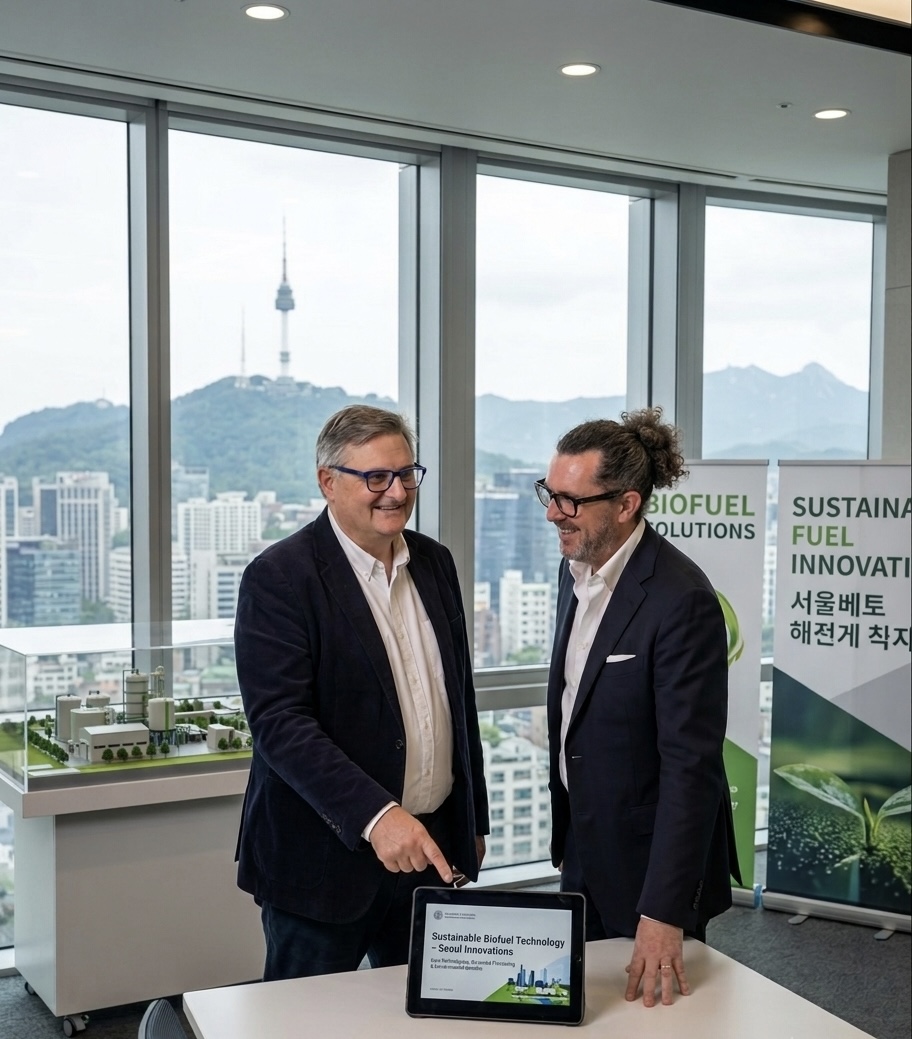
BioDesign Energy is based in Rome. The project, the company and the Italian patent application all began there. Seoul is the project’s second pole and the connection to one of Asia’s most active research ecosystems in energy and materials.
Why now
Advanced biofuels can replace part of the fossil fuel used in transport that is difficult to electrify. They can also create value from plants, agricultural residues and plant waste. To compete at scale, however, production costs must fall. That is the economic problem BioDesign Energy is working to solve.
Eurostat 2024: the baseline of Europe’s energy challenge.
Up from $655.1m in 2023, GVR estimate.
Estimated compound annual growth, 2024–2030.
Advanced biofuels and renewable hydrogen in transport.
The industrial problem
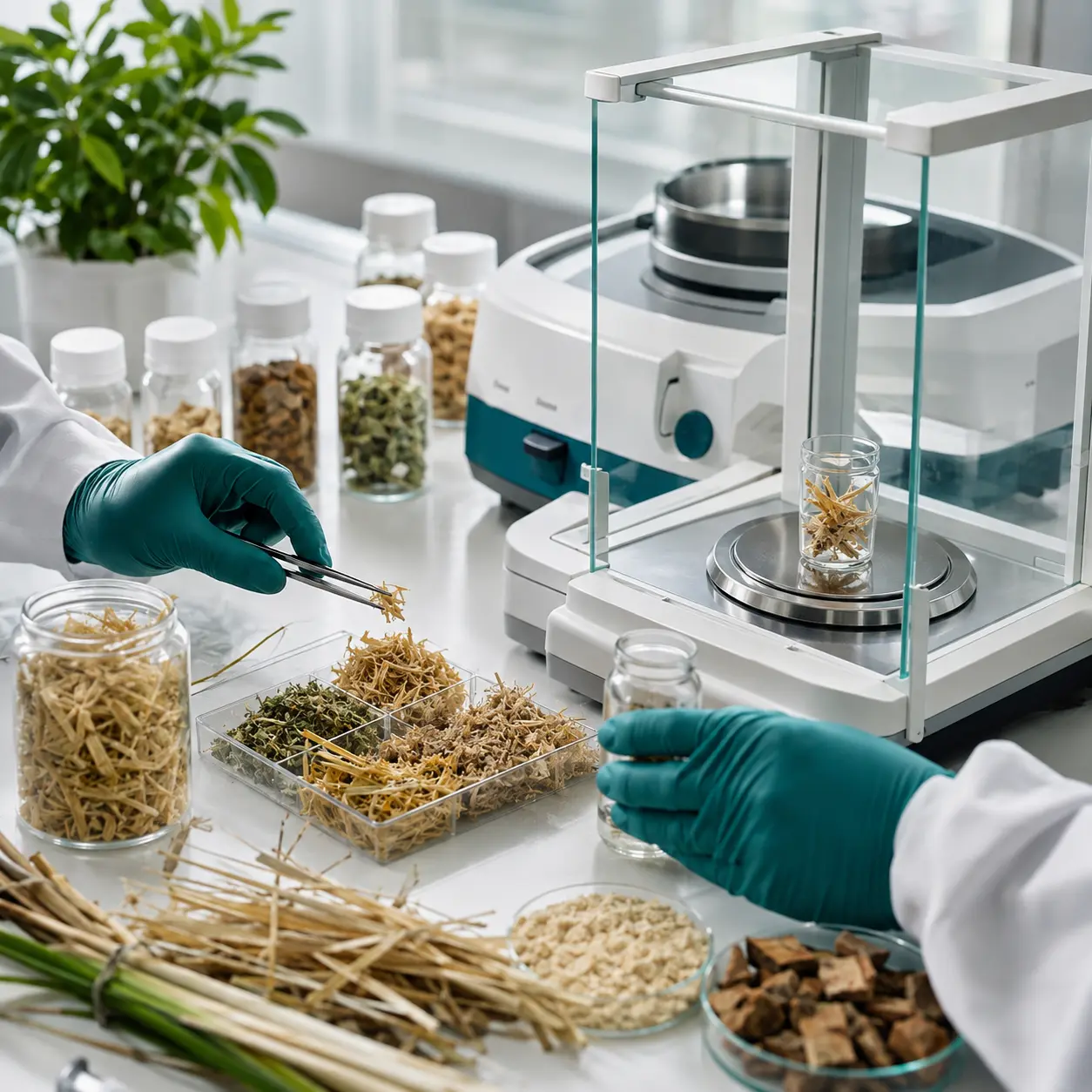
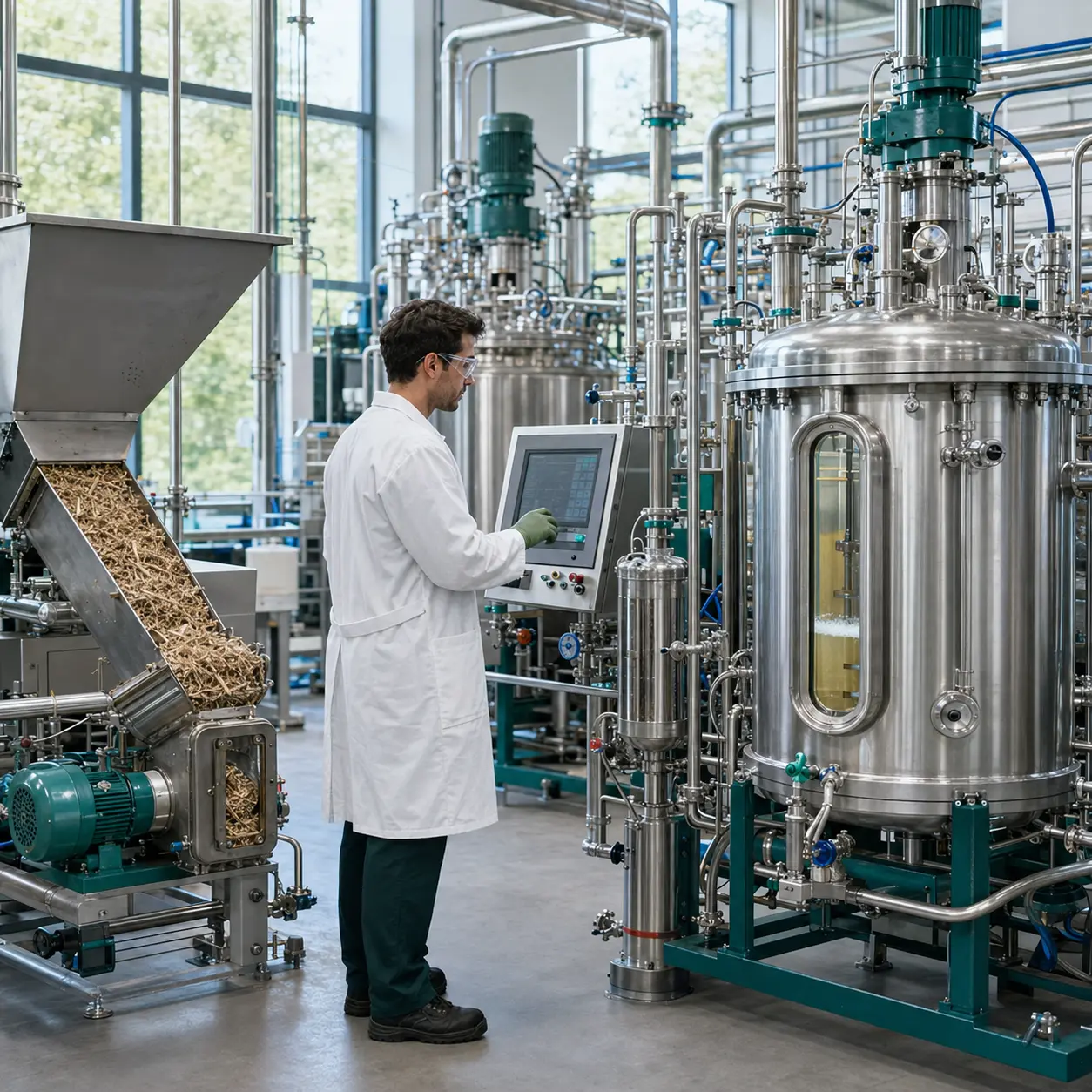
Agricultural residues, plant waste and used oils are never perfectly uniform. Starting with general-purpose enzymes means more experiments, more time and more expense before producers find a solution that fits their process.
Agricultural residues and plant waste differ in composition and behaviour.
Trial-and-error selection takes many iterations to reach candidates suited to the process.
A promising laboratory result does not guarantee performance under industrial conditions.
Initial applications
The first application targets bioethanol made from agricultural residues and plant waste. The second targets biodiesel made from oils, including used oils.
To convert cellulose in agricultural residues and plant waste into fermentable sugars.
To catalyse the conversion of oils, including waste oils, into biodiesel.
BioDesign Energy technology
BioDesign Energy starts with the available material and the plant’s operating conditions. Computational design identifies and ranks the most promising candidates, allowing laboratories to focus on the experiments most likely to produce useful evidence. Laboratory validation remains essential.
Feedstock, pretreatment and operating conditions become the design brief.
The system generates molecular candidates aligned with the target application.
Candidates are ranked to focus time and budget on the most useful experiments.
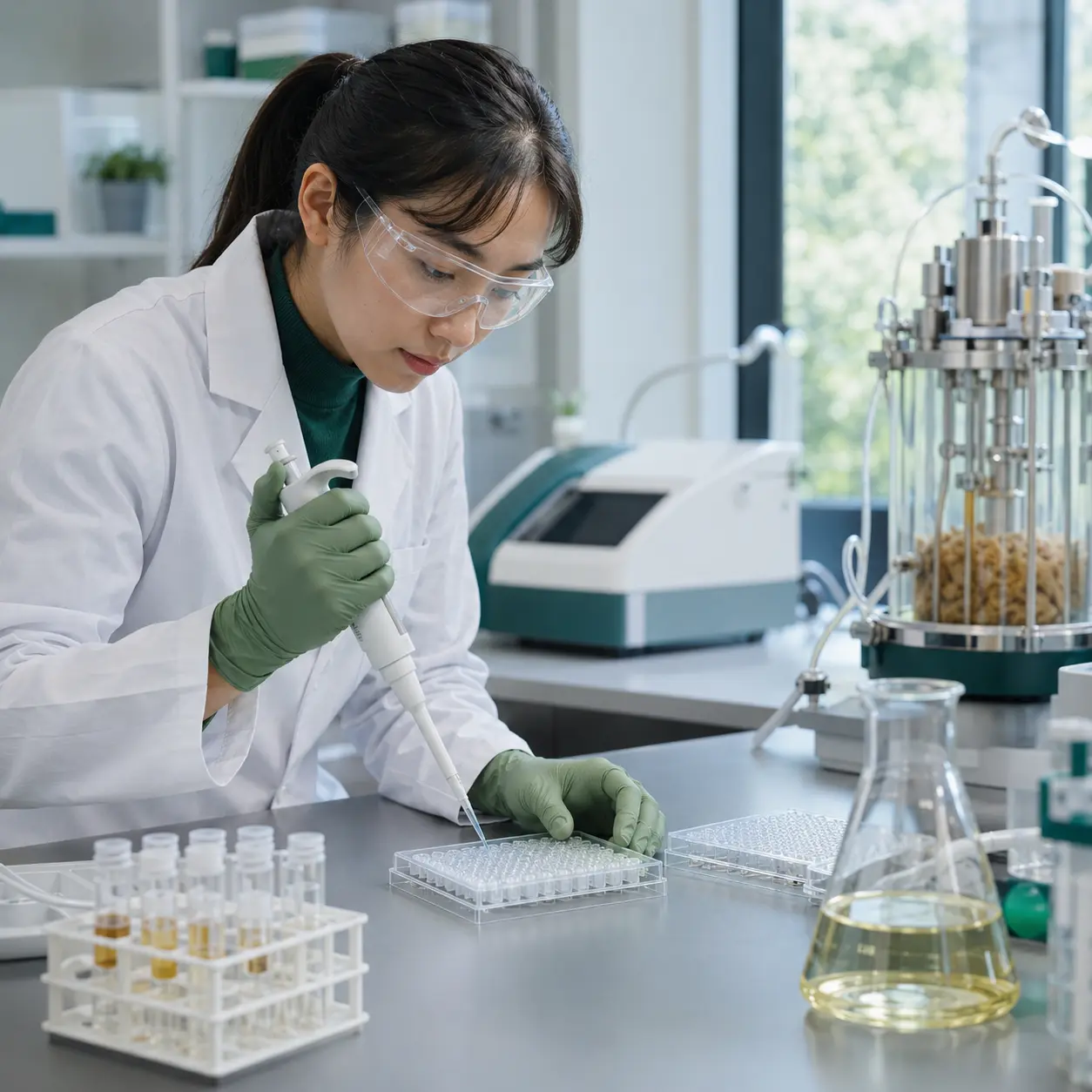
Priority sequences are synthesized, expressed and tested by specialists.
Evidence leads to joint development, licensing or a new design iteration.
Positioning
Large industrial-enzyme producers serve mass markets with general-purpose products. AI protein-design platforms operate across many applications, without native specialization in the biofuel production process.
Optimized for broad markets and large volumes, not for the variability of a specific biomass.
Horizontal design capabilities that are not necessarily integrated with feedstock, plant and biofuel validation pathways.
A vertical position between the two: candidates designed for biofuel applications and validated with laboratories and producers.
Business model
Biodesign Energy monetizes each application through licences and programs with biofuel producers. The model combines upfront revenue, milestones and royalties.
No capital is tied up in plants. Revenue comes from licences and joint-development programmes with partners that already own production capacity.
Licences by application, territory or partner, combining upfront fees, milestones and royalties on production volumes.
Co-funded programs with producers to validate a specific feedstock and convert the result into an industrial licence.
Where evidence is built
Team and scientific network
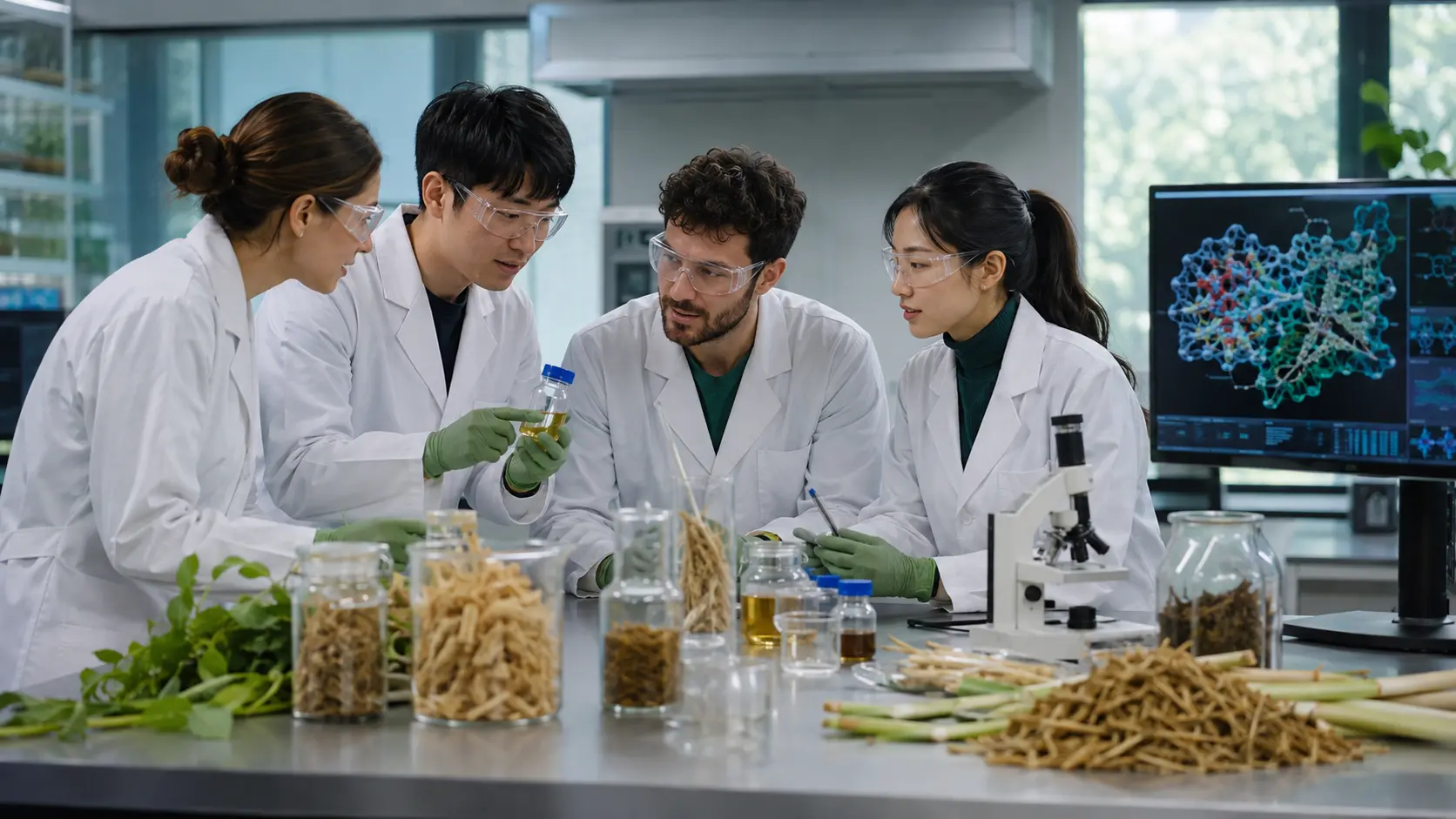
Biodesign Energy combines invention and computational design with expertise in materials and energy processes. The two areas jointly guide the validation pathway.
◍ Rome · active between Seoul and Tokyo
Researcher, platform creator and inventor of the technology, applying machine learning and generative AI to molecular design. He is the author of the forthcoming book «AI per i leader con il metodo Shu Ha Ri» and winner of the Planet Green Chem award at Expo Milano 2015. A serial founder, he led a previous venture in urban agriculture and agro-space research, selected by Agrinnova, an initiative by Wired and IBM, and recognized for excellence in space-farming techniques. His work connects the valorization of agricultural residues with their enzymatic conversion into energy. He holds three international patents and authored a Horizon 2020 proposal awarded the Seal of Excellence.
Chemist and materials scientist, with a PhD in Electrochemistry from the University of Genoa. He conducted research on materials for energy applications at the University of Tokyo, supported by a research fellowship from the Japan Society for the Promotion of Science (JSPS), and at the National Institute for Materials Science (NIMS) in Tsukuba. He then continued his work at the Korea Institute of Energy Research (KIER) and is a faculty member at Dongguk University in Seoul. An expert in membranes, energy technologies and CO₂ capture, he is the author of more than 100 scientific publications. At Biodesign Energy, this expertise strengthens the scientific validation pathway and the connection with South Korea’s research ecosystem.
Founder working full-time on the project. Scientific advisory is governed by a formal agreement.
Pre-seed round
The instrument and valuation are agreed with the first investors. The first closing funds intellectual-property protection, experimental capacity and the start of validation.
Protein-engineering hire, CRO and partner-laboratory contracts, scientific advisory, synthesis, expression and testing.
Compute, software and engineering.
Continued prosecution of the Italian application and international extension of the patent application.
Incorporation, administration, full-time founder compensation and operating structure.
18-month roadmap
The roadmap is structured around measurable milestones so that each phase produces evidence before the next one begins. Technical criteria remain confidential and are agreed with investors and partners under NDA.
Corporate vehicle incorporation, protein-engineering hire, CRO and partner-lab contracts, validation-plan definition and international extension of the patent application.
The CRO partner synthesizes and expresses the priority sequences and prepares a traceable experimental package for validation.
Candidates are evaluated on real biomass with an industrial partner under representative conditions. Preparation for the seed round proceeds in parallel.
Investor and partner access
The public teaser supports an initial assessment. A 20-minute call confirms fit and interest before opening the confidential data room.
After an NDAThe full deck, patent documentation and international protection strategy are shared only after an NDA with qualified parties.
Thesis, applications, roadmap and round, with no confidential technical data.
Request the teaserA focused conversation for investors, producers and validation partners.
Book 20 minutes